So, you’ve read the posts on Taeguk E Jang and Taeguk Il Jang. Now to learn about Taeguk Sam Jang! The third taeguk form (That’s what it literally translates too!).
Taeguk Sam Jang is where poomse starts to get more complicated. For one thing, it introduces the back stance! This stance is (as the name suggests) reliant on applying weight in the back leg. The percentage of weight you put on the back leg depends highly on which instructors you ask. Some say 60:40, some say 75:25, others go so far as 90:10. Personally, I start students with 60:40. the back stance also features an L-shape foot position. The best way to explain this is to put your feet heel-to-heel then step out 2 times. That is (roughly) how far out your feet should be from each other.
What’s Important About Sam Jang?
A key part of Taeguk Sam Jang is combinations. In performing the form, students blend more techniques together than in either Taeguk Il Jang or Taeguk E Jang. This creates a tempo to the form and shows how techniques can be brought together in one motion. Practically speaking, the tempo itself isn’t very useful. But it is certainly important in Poomse tournaments!

Key Techniques
One of the key techniques in Taeguk Sam Jang is the introduction to knife hands. Particularly a hansonnal bakkatmakki, or knife-hand block. This particular technique is used to block and move a fist out of the way before the punch lands. The knife hand block is then followed up with a punch as a counter-attack. So why use a knife hand instead of a fist? There are a couple of reasons. For one thing, it’s easier for a knife hand to shift into a wrist grab. It’s also hypothetically faster, though to be honest I’m not sure if there is evidence to this. I’d certainly be curious to see any though!
Now for the philosophical concept. You’ve learned about trigrams, now to learn about the elements. I mentioned this briefly in the Taeguk Il Jang post. Each form symbolizes an element. But wait, there are eight forms. Aren’t there only four elements? Good question! Yes and no. First off, that TV show is amazing, and one of my favorites. Second, when a taekwondo person is talking about “the elements” They’re talking about a different set of elements. The four elements in that show stem from the four elements presented by Plato, a Greek philosopher. The elements presented in the taekwondo forms comes more from Taoist philosophy (originating from Lao Tsu in East Asia). The eight elements of the forms represent certain concepts within the Taeguk forms.
What does Taeguk Sa Jang Represent?
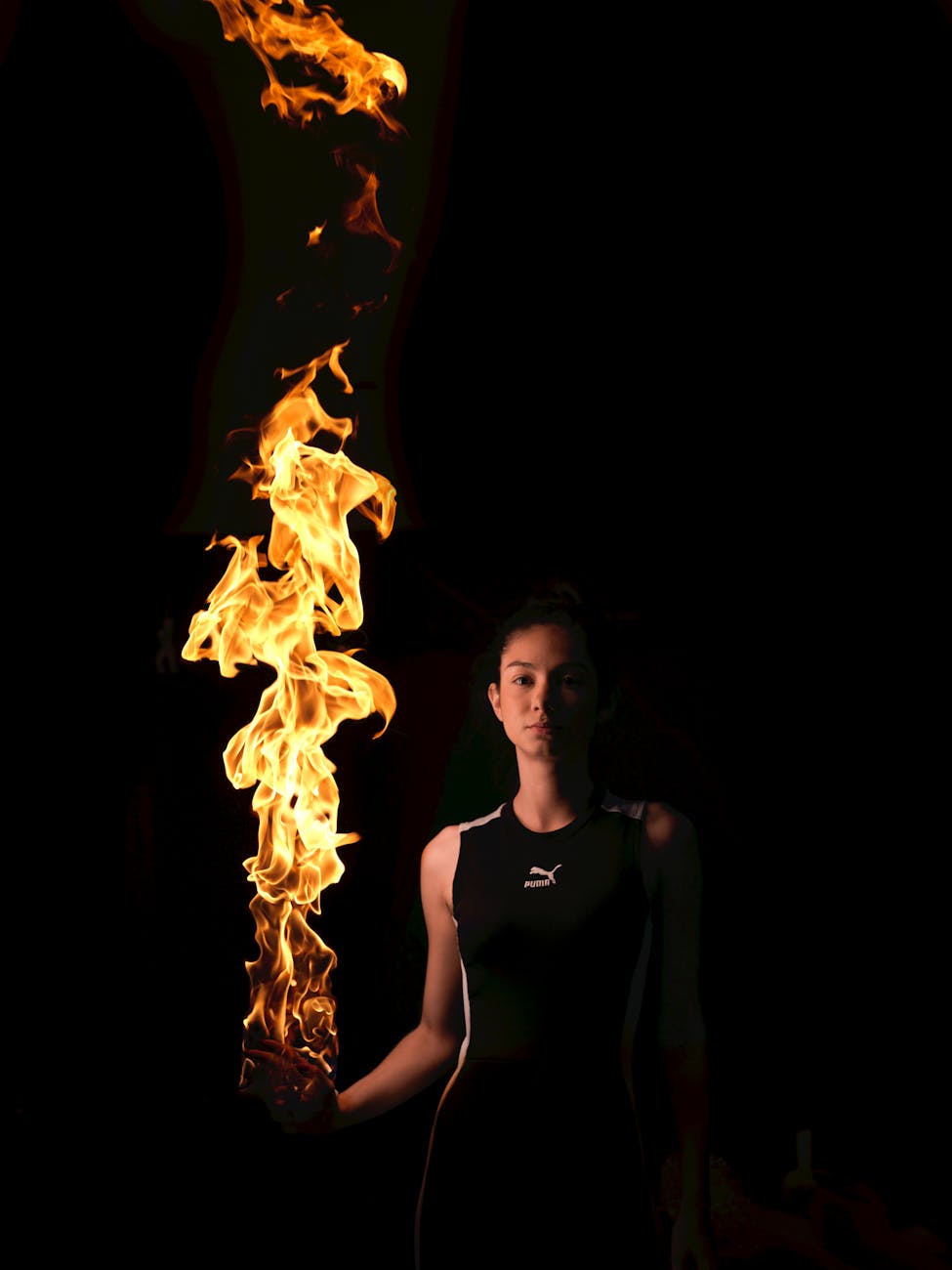
Taeguk Sam Jang signifies fire. With Taeguk Sam Jang we focus on the power and speed in our strikes. Much like how fire flickers and snaps, so do the techniques in the form. You know that snapping and popping sound fire makes? If done correctly, you should hear a similar sound when performing a form. The snapping sound comes from your dobok. It happens when you perform a technique with speed and power. You’ll notice this effect a lot in sport poomse performances and see the blocks in sparring competitions.
What did you think? Did you learn something new? Subscribe, and share this knowledge with others! Have a wonderful day!
This site is for informational and entertainment purposes only. All martial arts techniques and exercises should be supervised by a trained martial arts instructor in order to prevent injuries and to ensure the proper technique is utilized. The information on these pages and videos is meant only to amuse, not replace, the instruction given at your martial arts classes. To properly understand these techniques, you need to learn them from a martial arts instructor who can provide you with an in-depth explanation of the technique, help correct your mistakes, answer your questions and detail how the technique should be utilized. In addition, all martial arts techniques and training should be used safely and responsibly.

Leave a Reply